Introduction
Cross-border trucking remains one of the most delay-prone segments of global logistics. Long queues, manual inspections, document verification, and fragmented data systems often result in hours—or even days—of idle time at border checkpoints.
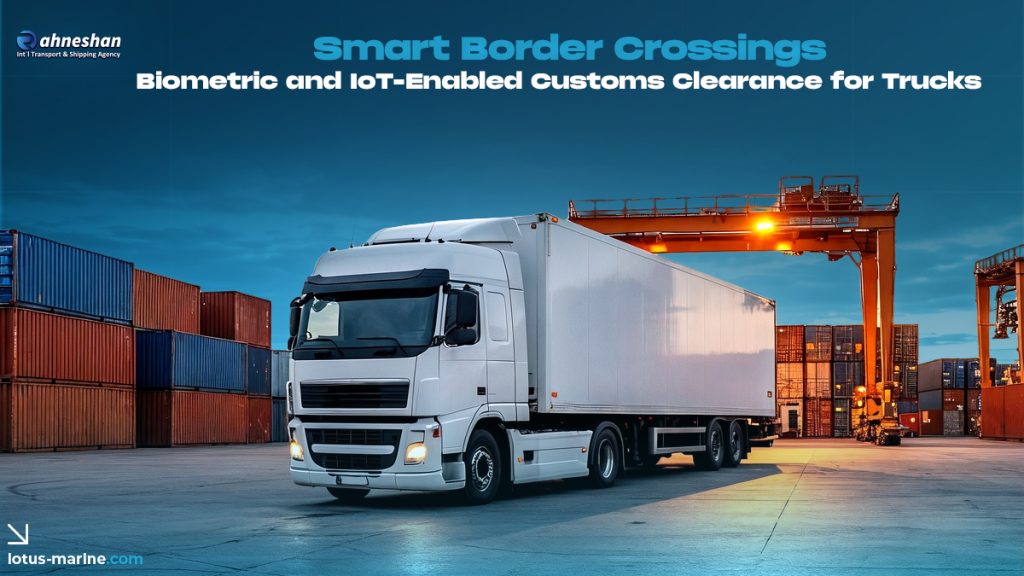
In 2025, smart border crossings powered by biometric verification and IoT-enabled customs clearance systems are reshaping how trucks move across international boundaries. These technologies are reducing processing time, improving security, and increasing supply chain predictability.
For freight forwarders, logistics providers, and fleet operators, smart borders are not just an efficiency upgrade—they are becoming a strategic necessity.
The Problem with Traditional Border Crossings
Conventional border clearance processes typically involve:
-
Manual passport and driver identity checks
-
Paper-based customs documentation
-
Separate data systems for different authorities
-
Repetitive inspections
-
Lack of real-time shipment tracking
This results in:
-
Prolonged truck idle time
-
Increased fuel consumption
-
Higher driver labor costs
-
Missed delivery windows
-
Security vulnerabilities
In time-sensitive B2B logistics, these inefficiencies directly impact profitability and reliability.
What Are Smart Border Crossings?
Smart border crossings integrate biometric authentication, IoT tracking, digital documentation, and AI-based risk assessment to automate and accelerate customs clearance for trucks.
Core components include:
Biometric Identification
-
Facial recognition
-
Fingerprint or iris scanning
-
Digital driver credentials
These systems verify driver identity instantly and securely.
IoT-Enabled Cargo Tracking
-
GPS-enabled smart seals
-
Real-time cargo monitoring sensors
-
Tamper-detection devices
Authorities can verify cargo integrity before trucks arrive at checkpoints.
Pre-Arrival Data Submission
Customs documents are submitted electronically in advance, allowing authorities to pre-screen shipments.
Automated Risk Profiling
AI systems assess shipment risk levels and determine whether inspection is required—reducing unnecessary stops.
How Biometric Systems Improve Border Efficiency
Biometric authentication eliminates manual document comparison and identity fraud risks.
Benefits include:
-
Faster identity verification
-
Reduced queue times
-
Enhanced border security
-
Lower risk of unauthorized access
-
Seamless integration with digital driver records
For logistics companies, this means fewer unpredictable delays tied to identity checks.
The Role of IoT in Customs Clearance
IoT devices provide continuous visibility across the supply chain:
-
Smart seals verify container integrity
-
Sensors monitor temperature-sensitive cargo
-
GPS tracking confirms route compliance
-
Real-time alerts flag suspicious deviations
By the time a truck reaches the border, authorities already have full shipment visibility—reducing the need for physical inspections.
Key Benefits for Road Freight Logistics
Reduced Border Waiting Times
Automated systems significantly shorten clearance time, improving fleet utilization.
Lower Operating Costs
Less idle time means reduced fuel consumption and overtime costs.
Increased Delivery Predictability
Improved ETA accuracy strengthens service commitments.
Enhanced Security and Compliance
Biometric and IoT systems reduce smuggling, fraud, and documentation errors.
Improved Sustainability
Shorter queues reduce emissions near border areas—aligning with ESG targets.
Strategic Impact for Freight Forwarders
Freight forwarders operating on cross-border corridors gain:
-
Faster transit times for international shipments
-
Lower risk of detention penalties
-
Stronger control over documentation workflows
-
Ability to offer premium “fast-lane” services
-
Competitive differentiation in congested trade routes
Smart borders enable forwarders to shift from reactive clearance management to proactive, data-driven coordination.
Real-World Use Cases in 2025
-
North American cross-border corridors
-
European Union external borders
-
Asia-Europe land bridge routes
-
High-security trade lanes
-
Temperature-controlled pharmaceutical logistics
Governments are increasingly investing in digital border modernization to reduce congestion and enhance security.
Challenges and Considerations
Infrastructure Investment
Smart border implementation requires significant technological upgrades.
Data Privacy Concerns
Biometric systems must comply with strict data protection regulations.
Cross-Jurisdiction Coordination
Success depends on cooperation between neighboring countries.
Technology Standardization
Interoperability between different customs systems remains a challenge.
Future Outlook: 2025–2035
-
Wider adoption of fully digital customs ecosystems
-
Integration with blockchain-based trade documentation
-
Expansion of AI-driven risk scoring
-
Autonomous truck integration at smart checkpoints
-
Increasing pressure for zero-emission border operations
Smart border crossings are evolving from pilot projects to core trade infrastructure.
Frequently Asked Questions
Are biometric border systems secure?
Yes, when implemented with strong encryption and regulatory compliance.
Do IoT-enabled systems eliminate physical inspections?
Not entirely, but they significantly reduce unnecessary inspections.
Can small trucking fleets benefit?
Yes. Participation often depends on digital documentation and approved carrier programs.
Will smart borders replace customs officers?
No. They enhance efficiency while allowing officers to focus on high-risk cases.
Conclusion
Smart border crossings powered by biometric authentication and IoT-enabled customs clearance are redefining cross-border trucking. By reducing delays, enhancing security, and improving operational visibility, these systems create faster, safer, and more predictable trade corridors.
For freight forwarders and logistics providers, adopting digital border-ready processes is no longer optional—it is essential for competitiveness in a globalized, data-driven trade environment.
In the future of road logistics, the fastest border is the one that verifies before you arrive.