Introduction
Maritime transport has always been exposed to one critical variable: weather. From storms and high waves to wind patterns and ocean currents, environmental conditions directly affect vessel safety, fuel consumption, transit time, and cargo integrity.
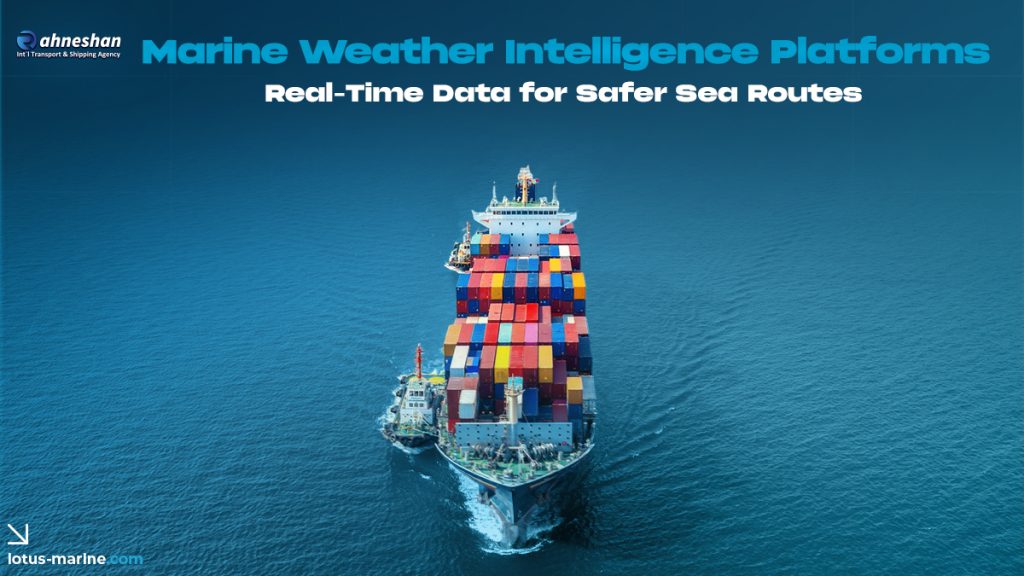
In 2025, traditional weather forecasts are no longer sufficient for modern shipping operations. Instead, marine weather intelligence platforms—powered by real-time data, satellite inputs, AI modeling, and predictive analytics—are redefining how shipping companies plan and execute sea routes. For ship operators, freight forwarders, and logistics providers, these platforms are becoming essential tools for safer, smarter, and more competitive maritime operations.
What Are Marine Weather Intelligence Platforms?
Marine weather intelligence platforms are digital systems that collect, analyze, and visualize real-time and predictive maritime weather data to support navigation and route planning.
They typically integrate data from multiple sources, including:
-
Satellite imagery and remote sensing
-
Ocean buoys and wave sensors
-
AIS and vessel telemetry data
-
Global weather models and forecasts
-
Historical weather and sea-condition databases
Using AI-driven analytics, these platforms convert raw environmental data into actionable insights—helping operators anticipate risks, adjust routes, and make informed decisions at sea.
Why Real-Time Marine Weather Intelligence Matters
1. Enhancing Vessel Safety
Unexpected storms, rogue waves, or sudden wind shifts remain major causes of maritime incidents. Real-time intelligence platforms provide early warnings and continuous updates, allowing crews and operations teams to avoid hazardous conditions before they escalate.
2. Optimizing Route Planning and Navigation
Instead of following static routes, vessels can dynamically adjust their course based on live weather and sea conditions—balancing safety, speed, and fuel efficiency.
3. Reducing Fuel Consumption and Emissions
Weather-aware routing helps ships avoid adverse currents and headwinds, leading to smoother voyages and lower fuel burn. This directly supports cost control and sustainability targets.
4. Protecting Cargo and Crew
High-value or sensitive cargo—such as chemicals, perishables, or project cargo—requires stable sea conditions. Advanced weather intelligence reduces exposure to excessive motion, temperature variations, and weather-related delays.
Key Capabilities of Modern Marine Weather Intelligence Platforms
Real-Time Monitoring
Continuous tracking of wind speed, wave height, swell direction, sea surface temperature, and pressure systems across planned routes.
Predictive Analytics and Forecasting
AI-enhanced models predict weather developments hours or days ahead, enabling proactive rather than reactive decision-making.
Risk Scoring and Alerts
Automated alerts flag high-risk zones, helping operators assess route safety at a glance.
Integration with Voyage Planning Systems
Seamless integration with navigation software, fleet management systems, and bridge systems allows weather intelligence to be embedded directly into operational workflows.
Historical Analysis and Performance Review
Post-voyage analysis compares planned versus actual conditions—supporting continuous improvement in routing strategies.
Benefits for Shipping Companies and Freight Forwarders
Improved Schedule Reliability
By avoiding weather-related delays, shipping lines and forwarders can provide more accurate ETAs and stronger service-level commitments.
Lower Operational Risk
Fewer incidents, reduced weather-related damage, and improved crew safety translate into lower insurance exposure and operational risk.
Competitive Cost Advantage
Optimized routes reduce fuel consumption, unplanned detours, and port delays—directly improving margins.
Stronger ESG and Sustainability Positioning
Weather-aware routing contributes to lower emissions and safer operations—key metrics in ESG reporting and client evaluations.
Better Client Communication
Freight forwarders can proactively inform clients about potential delays or rerouting decisions backed by data—building trust and transparency.
Challenges and Considerations
Data Accuracy and Reliability
The effectiveness of weather intelligence depends on the quality and timeliness of data sources. Platforms must continuously validate and update inputs.
Integration Complexity
Shipping companies often operate multiple navigation and fleet systems. Seamless integration is essential to avoid fragmented decision-making.
Human-Machine Collaboration
Crews and operators must be trained to interpret data correctly and balance algorithmic recommendations with human judgment.
Cost vs. Value Perception
Smaller operators may hesitate to invest without clear ROI. Demonstrating fuel savings, risk reduction, and performance gains is critical.
Strategic Implications for Logistics Providers
For freight forwarders and logistics companies, marine weather intelligence platforms enhance service quality beyond vessel operations:
-
More reliable transit times for ocean freight
-
Reduced risk for high-value or sensitive cargo
-
Data-backed explanations for routing or delay decisions
-
Differentiated “safety-first” or “smart routing” service offerings
Forwarders that align with weather-intelligent carriers—or leverage such data in client communication—gain a competitive edge in reliability-focused trade lanes.
Outlook: Marine Weather Intelligence in 2025 and Beyond
-
Increased use of AI and machine learning for hyper-local maritime forecasts
-
Greater integration with autonomous and semi-autonomous vessels
-
Expansion of real-time weather intelligence into port arrival and berthing optimization
-
Stronger links between weather data, fuel optimization, and emissions reporting
-
Growing client demand for transparency around route safety and environmental impact
As climate volatility increases, the value of accurate, real-time marine weather intelligence will only grow.
Frequently Asked Questions (FAQ)
Are marine weather intelligence platforms different from standard weather forecasts?
Yes. They combine real-time data, predictive analytics, and maritime-specific modeling rather than general weather forecasts.
Do these platforms replace human decision-making?
No. They support and enhance human judgment, enabling better-informed decisions.
Which vessels benefit most from weather intelligence platforms?
All vessels benefit, but especially large container ships, tankers, bulk carriers, and vessels carrying sensitive or high-value cargo.
Can freight forwarders access this data directly?
In many cases, yes—either through carrier partnerships or integrated logistics platforms.
Conclusion
Marine weather intelligence platforms are transforming maritime navigation from reactive forecasting to proactive, data-driven decision-making. In 2025, real-time weather intelligence is no longer optional—it is a core capability for safe, efficient, and competitive sea freight operations.
For shipping companies, these platforms reduce risk, cost, and uncertainty. For freight forwarders and logistics providers, they unlock higher reliability, better client communication, and a clear differentiation in a demanding global market.
As maritime trade faces increasing climate volatility and operational pressure, real-time marine weather intelligence will be a defining factor in safer and smarter sea routes.