Introduction
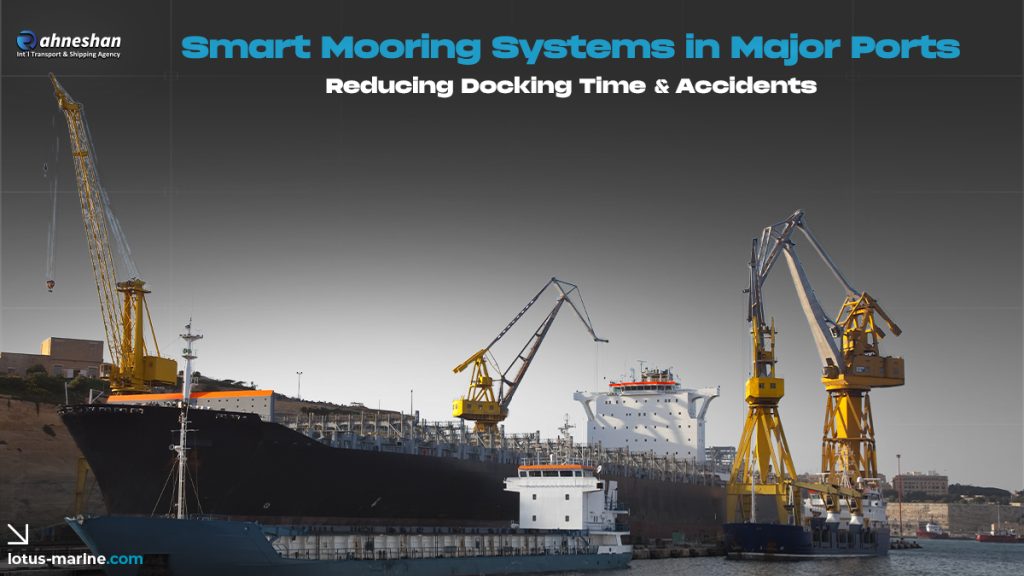
As global shipping volumes grow and vessels become larger, port efficiency and safety are under increasing pressure. Traditional mooring methods—reliant on ropes, manual labor, and weather-dependent operations—are becoming a bottleneck for modern ports. Delays during berthing, rope failures, and human error continue to cause accidents, operational downtime, and financial losses.
In response, smart mooring systems are emerging as a critical innovation in major ports worldwide. By replacing conventional mooring lines with automated, sensor-driven technologies, ports can significantly reduce docking time, improve safety, and enhance overall terminal performance. For shipping companies, freight forwarders, and port operators, smart mooring is no longer a future concept—it is becoming a competitive necessity.
What Are Smart Mooring Systems?
Smart mooring systems are automated vessel-berthing solutions that use advanced technologies—such as vacuum pads, sensors, real-time monitoring, and automated controls—to secure ships to the quay without traditional ropes.
Key components typically include:
-
Vacuum or magnetic mooring units mounted on the quay
-
Sensors that monitor vessel movement, wind, tide, and load forces
-
Automated control systems that adjust holding force in real time
-
Integration with port management and vessel traffic systems
These systems allow vessels to be secured within seconds after arrival and released just as quickly—without manual rope handling.
Why Major Ports Are Adopting Smart Mooring Systems
1. Reducing Docking and Undocking Time
Traditional mooring can take 20–40 minutes or more, depending on vessel size and weather conditions. Smart mooring systems can reduce this to a few minutes, enabling faster turnaround and improved berth utilization.
For busy container and bulk ports, even small time savings per vessel translate into major annual capacity gains.
2. Improving Safety and Reducing Accidents
Mooring operations are among the most dangerous activities in ports. Rope snap-back incidents and human error can cause serious injuries or fatalities. Smart mooring systems eliminate most manual rope handling, dramatically reducing accident risk for dock workers and crew.
3. Handling Larger Vessels in Challenging Conditions
As vessel sizes increase, traditional mooring becomes more complex—especially in high winds, strong currents, or tidal variations. Smart mooring systems continuously adjust holding force in real time, maintaining vessel stability even in difficult conditions.
4. Enhancing Port Productivity
Faster berthing means quicker start of loading/unloading operations. This improves crane utilization, reduces congestion, and allows terminals to handle more vessels without expanding physical infrastructure.
Operational Benefits for Shipping Lines & Freight Forwarders
Faster Turnaround, More Reliable Schedules
Reduced berthing delays lead to more predictable schedules—critical for global shipping lines and freight forwarders managing tight connections and downstream logistics.
Lower Operational Risk and Cost
Fewer accidents mean lower insurance claims, reduced downtime, and less exposure to operational disruptions. Over time, this contributes to lower total cost of port calls.
Improved ESG and Safety Credentials
Ports and shipping companies using smart mooring systems can demonstrate a strong commitment to worker safety and operational excellence—important for ESG reporting and corporate reputation.
Better Performance in Congested Ports
In high-traffic ports, smart mooring helps maximize berth availability and reduces vessel queuing—an advantage for forwarders seeking reliable port performance for their clients.
Challenges and Considerations
High Initial Investment
Smart mooring systems require significant upfront capital expenditure for equipment, quay reinforcement, and system integration. ROI depends on traffic volume and operational scale.
Port Infrastructure Compatibility
Not all quay structures are immediately suitable. Retrofitting older ports may require engineering adjustments and phased deployment.
Integration with Existing Port Systems
To unlock full value, smart mooring should be integrated with port management systems, terminal operating systems (TOS), and vessel traffic services.
Training and Change Management
Although automation reduces manual labor, port staff and vessel crews must be trained to work with new systems and procedures.
Strategic Implications for Logistics & Freight Companies
For freight forwarders and shipping partners, smart mooring systems influence port selection and service quality:
-
Ports with smart mooring offer faster, safer, and more predictable operations
-
Reduced berth delays improve end-to-end transit time reliability
-
Better safety performance lowers operational risk in port calls
-
Enhanced port efficiency supports premium and time-sensitive cargo services
Forwarders that prioritize or partner with smart-port operators can offer more reliable schedules and differentiate their services in competitive trade lanes.
Outlook: Smart Mooring Systems in 2025 and Beyond
The adoption of smart mooring systems is expected to accelerate, especially in:
-
Major container hubs
-
LNG and bulk terminals
-
Ports handling ultra-large vessels
-
Regions facing labor shortages or strict safety regulations
As part of the broader smart port and automation movement, smart mooring will increasingly integrate with AI-driven port operations, digital twins, and predictive maintenance systems.
Ports that fail to modernize risk slower operations, higher accident rates, and reduced competitiveness in global shipping networks.
Frequently Asked Questions
Do smart mooring systems completely replace traditional ropes?
In most cases, yes. However, some ports may use hybrid systems during transition phases.
Are smart mooring systems safe in extreme weather?
Yes. They are designed to dynamically adjust holding force based on real-time environmental conditions, often outperforming traditional mooring in wind and swell.
Which vessels benefit most from smart mooring?
Large container ships, bulk carriers, LNG vessels, and ferries benefit most due to their size and frequent port calls.
Is smart mooring suitable for all ports?
It is most suitable for high-traffic, high-value ports where time savings and safety improvements justify the investment.
Conclusion
Smart mooring systems represent a significant leap forward for modern ports—cutting docking time, reducing accidents, and improving overall operational efficiency. As ports face growing vessel sizes, congestion, and safety demands, automation at the quay is becoming unavoidable.
For shipping companies and freight forwarders, ports equipped with smart mooring systems offer faster turnaround, lower risk, and greater schedule reliability. In a competitive logistics environment, these advantages directly translate into stronger service quality and client trust.